Noirtier de Villefort
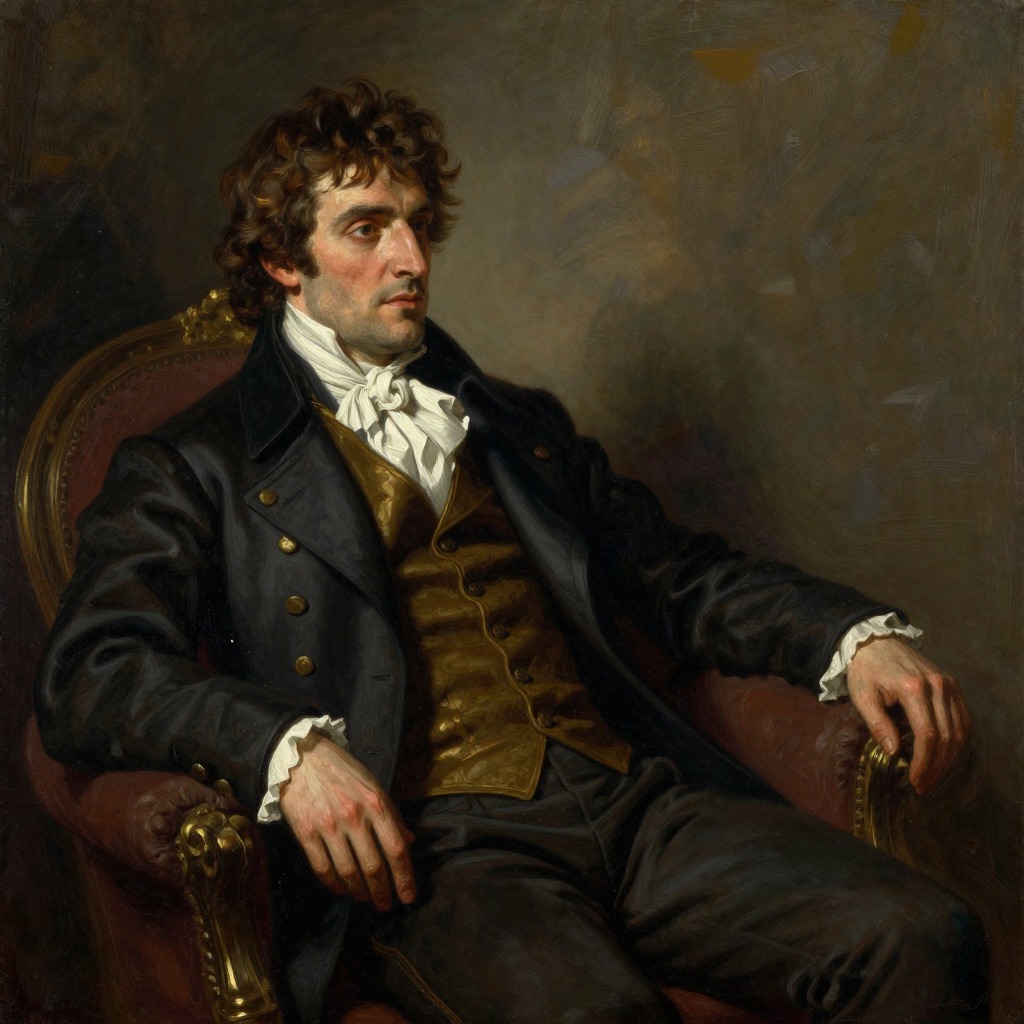
Noirtier de Villefort, the paralyzed Jacobin patriarch, is one of the most formidable figures in The Count of Monte Cristo. Stripped of speech and movement by a stroke, he nevertheless exerts a decisive influence on the plot, using only his eyes to communicate, command, and condemn. A former Girondin and senator under Napoleon, he embodies the revolutionary past that his son, the royalist magistrate Gérard de Villefort, has tried to bury. His physical helplessness masks an unbroken will, and his role shifts from a seemingly passive invalid to the active architect of his son's moral destruction and the protector of his granddaughter Valentine's happiness.
Identity and Political Past
Noirtier is introduced as a man of formidable revolutionary credentials. He was a Girondin during the Revolution, a senator under Napoleon, and a member of the Bonapartist Club in the Rue Saint-Jacques, where he served as vice-president . His political past is a source of constant tension with his son, Gérard de Villefort, a staunch royalist who has changed his name to distance himself from his father's legacy . Villefort acknowledges that his father was a Jacobin who conspired not for the emperor but against the Bourbons, applying the terrible theories of the Mountain . This political schism defines their relationship: Noirtier represents the violent, idealistic past that Villefort, as a magistrate of the Restoration, has dedicated his career to suppressing. The old man's history is not merely a background detail; it is the engine of the central conflict, as Villefort's fear of his father's past leads him to destroy the innocent Edmond Dantes.
Paralysis and Communication
Noirtier's physical condition is a central paradox of the novel. After a stroke, he is completely paralyzed, unable to speak or move, with only his eyes retaining the power of expression . His mind, however, remains perfectly clear and active. He communicates through a system of eye movements: closing his eyes for "yes," winking for "no," and using a dictionary to spell out words letter by letter . This system, mastered by his granddaughter Valentine and his faithful servant Barrois, transforms his apparent weakness into a source of power. His gaze becomes a weapon, capable of conveying fury, contempt, and command. The novel repeatedly emphasizes the terrifying intensity of his look, which can make even the hardened Villefort tremble . This disability, rather than reducing him, concentrates his formidable intellect into a single, piercing instrument of judgment.
Relationship with Valentine and Protection
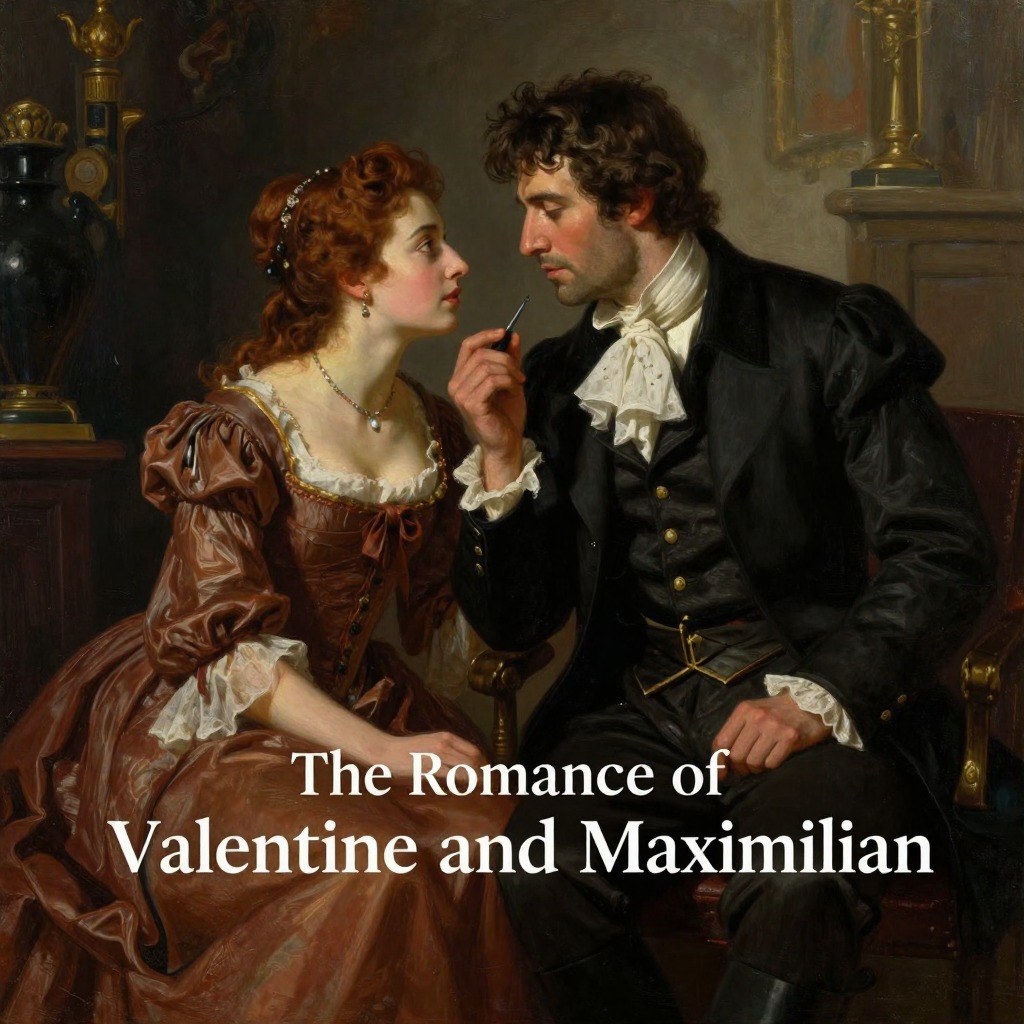
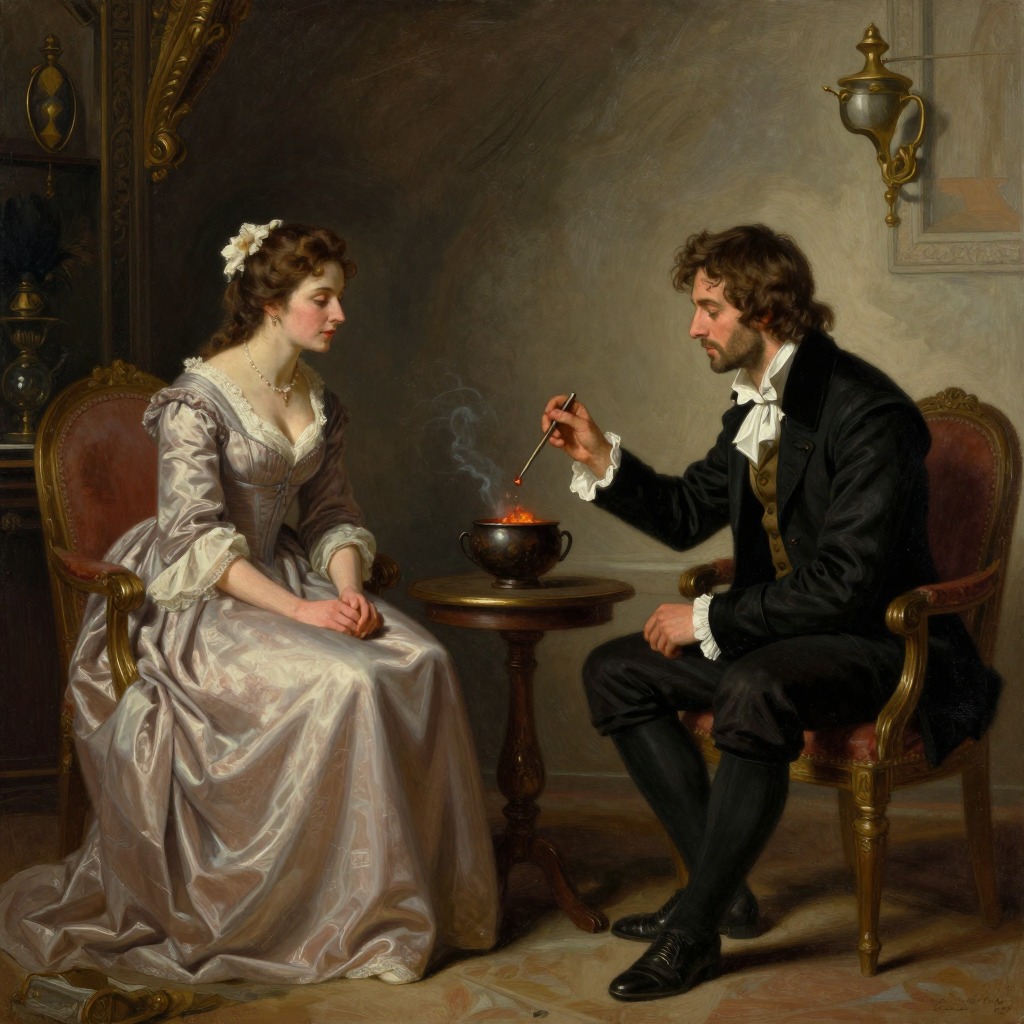
Noirtier's deepest bond is with his granddaughter, Valentine. She is his interpreter, his nurse, and the sole recipient of his love. He is her only ally against the machinations of her stepmother, Madame de Villefort, who seeks to poison her for her inheritance. Noirtier, suspecting the poisoner, has been secretly fortifying Valentine by sharing his own daily dose of brucine, a treatment prescribed by Dr. d'Avrigny for his paralysis . This act of prophylactic poisoning saves Valentine's life when she is given a lethal dose of the same substance. When Villefort and Madame de Villefort announce Valentine's forced marriage to Franz d'Epinay, Noirtier uses his only remaining power—his will—to oppose them. He dictates a new will disinheriting Valentine if she marries Franz, and then, in a climactic scene, reveals that he himself killed Franz's father in a duel, thereby breaking the engagement . His actions are not those of a helpless old man but of a strategic mastermind who uses his legal and moral authority to protect his beloved granddaughter.
Confrontation with Villefort and Final Judgment
The ultimate confrontation between Noirtier and his son is the moral climax of the Villefort family tragedy. After the death of Valentine (which is later revealed to be a feigned death orchestrated by Monte Cristo), Villefort is confronted by Maximilian Morrel, who demands justice. Noirtier, through his eyes, reveals that he knows the identity of the murderer . He then demands that Villefort, the king's attorney, be left alone with him . In this private interview, Noirtier forces his son to confront the truth: that his wife, Heloise, is the poisoner. Villefort, broken, agrees to keep the secret and to administer his own form of justice, but the revelation destroys him. Noirtier's final act is not one of vengeance but of judgment; he compels his son to see the evil within his own house, a punishment far more terrible than any legal sentence. His role is that of the implacable conscience, the living embodiment of a past that cannot be escaped.
Thematic Significance
Noirtier de Villefort is a powerful symbol of the inescapable past. He is the living ghost of the Revolution, a reminder of the violence and idealism that the Restoration sought to erase. His physical paralysis mirrors the political paralysis of a society trying to suppress its own history. Yet, his indomitable will demonstrates that the past cannot be silenced; it will find a way to speak, to judge, and to act. He is also a figure of profound moral complexity: a former revolutionary who committed acts of political violence, yet a loving grandfather who sacrifices everything for his granddaughter's happiness. In the novel's moral economy, Noirtier is one of the few characters who is both a sinner and a saint, a man who has blood on his hands but who ultimately acts as an agent of justice, not revenge. His final, silent blessing of the union between Valentine and Maximilian Morrel represents a reconciliation of the revolutionary past with a hopeful future, a future built on love and integrity rather than on the corrupt foundations of the old order.